
giant taro
Also known as: cunjevoi; giant elephant's ear; taro
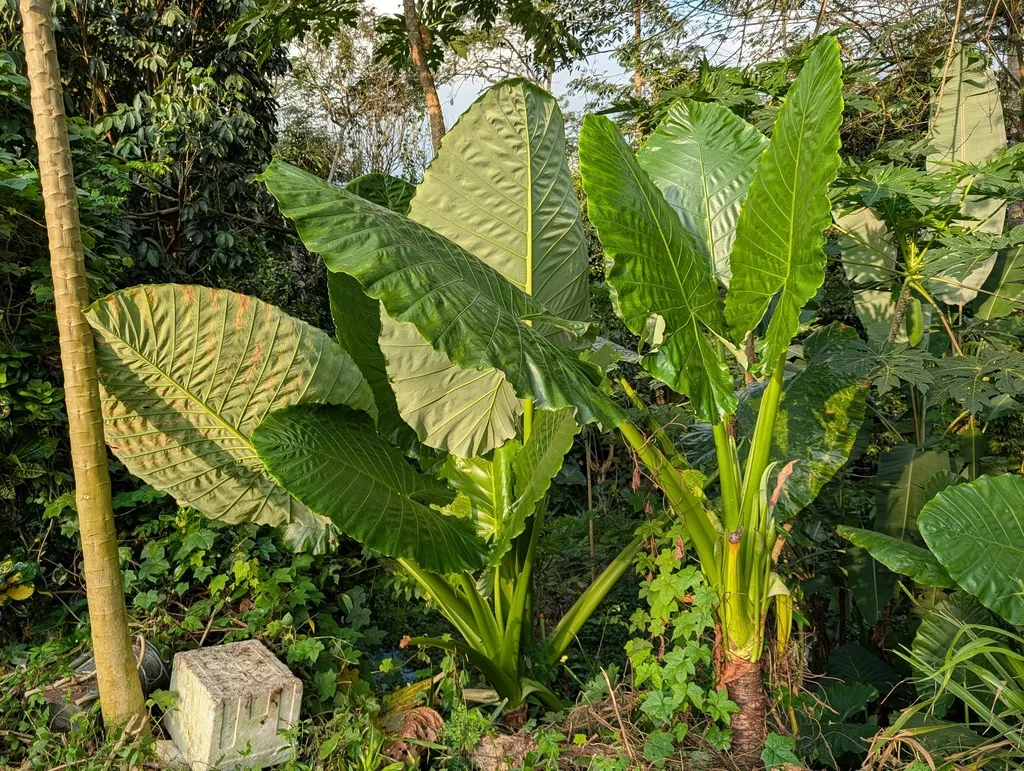
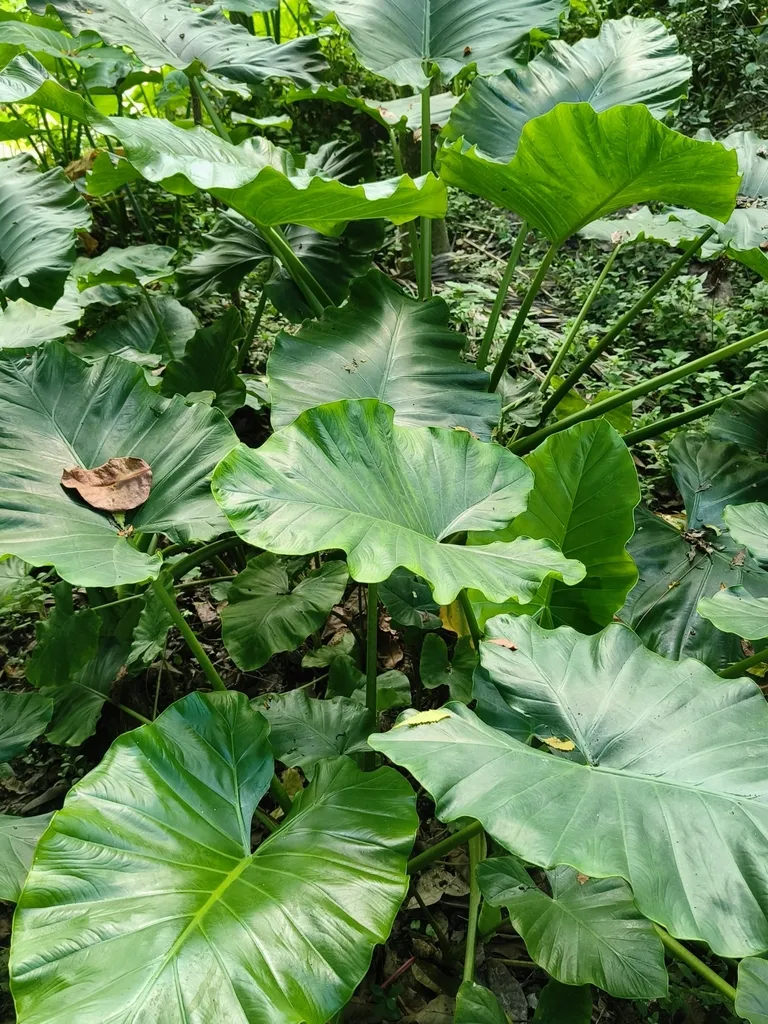
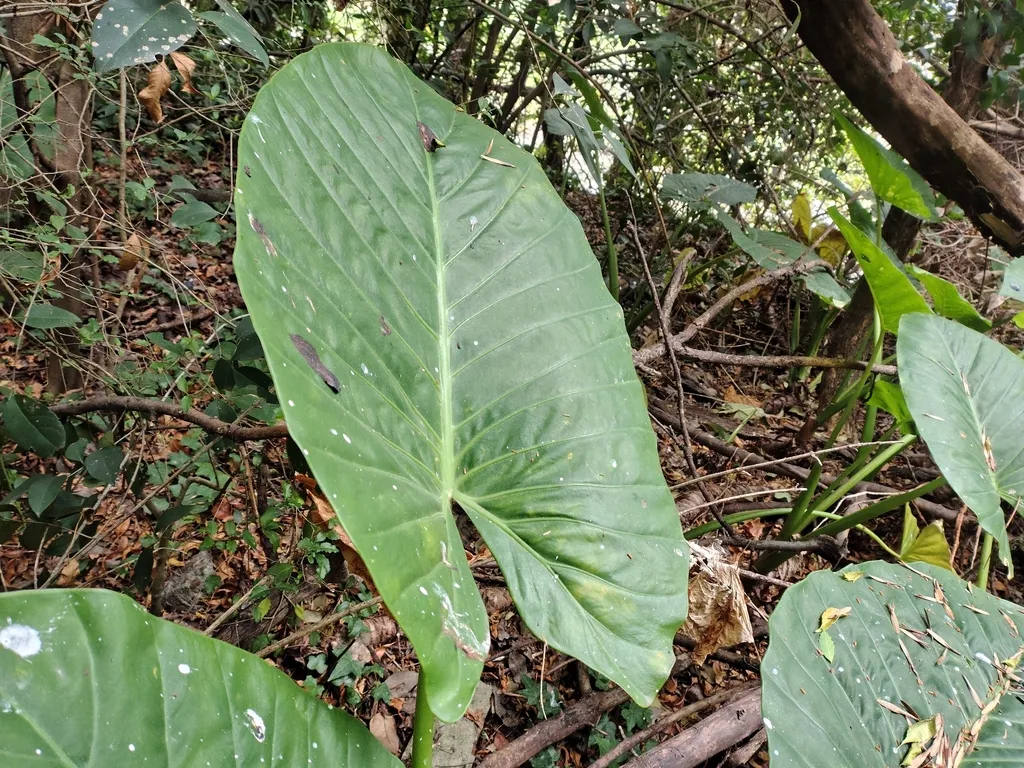
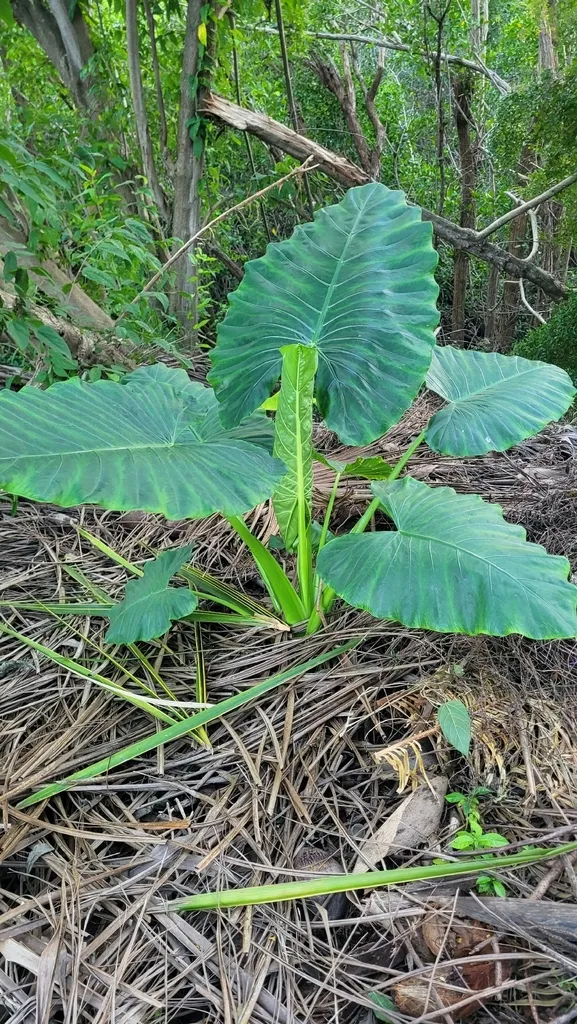
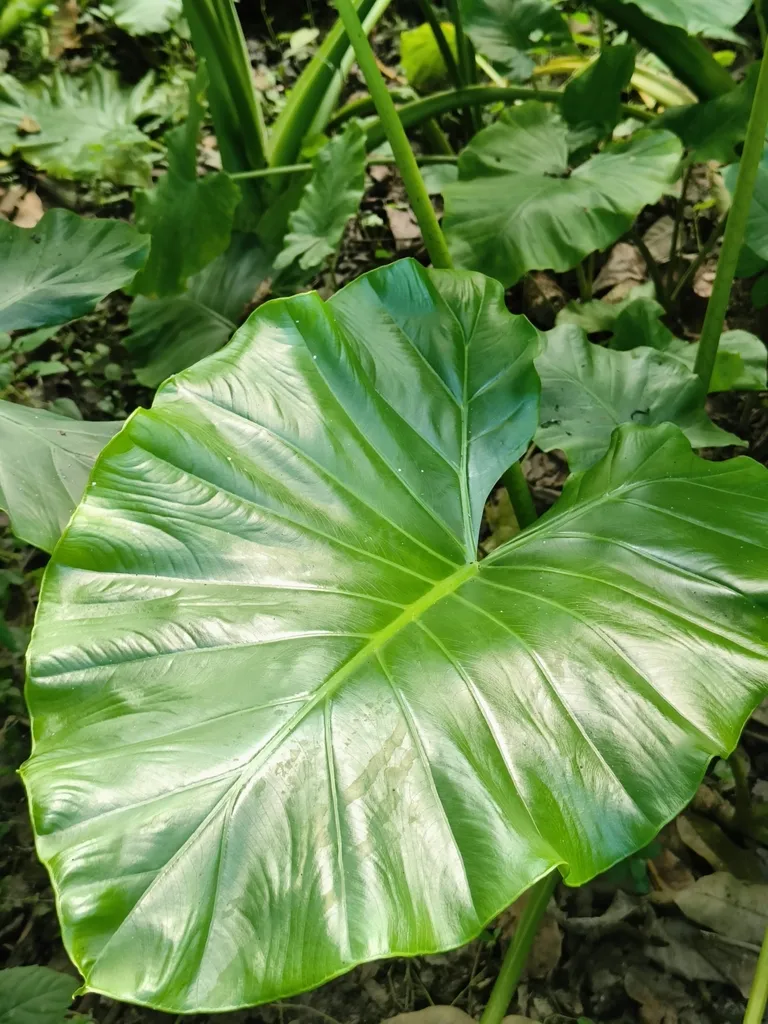
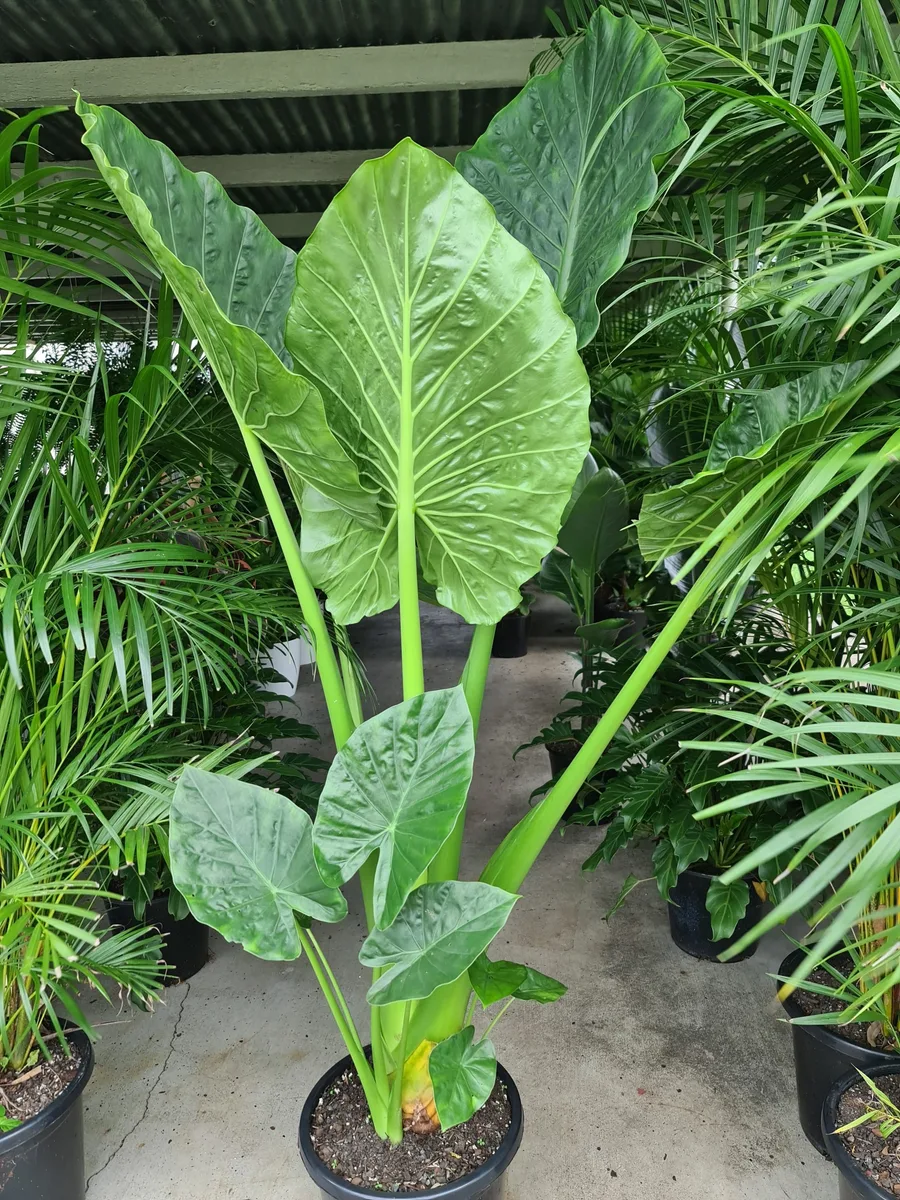
A tropical rhizomatous perennial grown for its huge, glossy mid-green leaves. The leaf blades have pale green veins and can reach 1.2m long; they are carried on erect leaf stalks to 1.2m tall. It may produce a pale green flower in summer. Giant taro is widely naturalised and cultivated in tropical areas as a food crop, although it requires a long cooking time before it is safe to eat. In cool climates it makes an interesting conservatory plant
Scientific classification
- Species
- giant taro (Alocasia macrorrhizos)
- Genus
- Alocasia
- Family
- Araceae
- Order
- Alismatales
- Class
- Liliopsida
- Phylum
- Magnoliophyta
- TOXIC if eaten, skin/eye irritant. Wear gloves and other protective equipment when handling]
- Toxicity
- Conservatory Greenhouse
- Plant type
- 1.5-2.5 metres
- Height
- 1.5-2.5 metres
- Spread
- Evergreen
- Foliage
- Columnar upright
- Habit
- Spring · Summer · Autumn · Winter
- Season of interest
- Partial shade
- Sunlight
- 20 – 30 °C
- Ideal temperature









giant taro pictures
Distribution of giant taro
Distribution map
- Native
- Introduced
- Cultivated
Source:WCVP v16 · Royal Botanic Gardens, Kew · CC BY 3.0 · Boundaries:WGSRPD / TDWG
Toxicity
TOXIC if eaten, skin/eye irritant. Wear gloves and other protective equipment when handling]
giant taro care guide
- Keep soil evenly moist with warmth and humidity
- Watering
- Partial shade
- Sunlight
- 20 – 30 °C
- Ideal temperature

Watering
Keep soil evenly moist with warmth and humidity
Fertilizing
 Fertilizing
Balanced feed every few weeks in active growth
Pruning
 Pruning
No pruning required
Propagation
 Propagation
Propagate by sowing seed at 23°C as soon as it's ripe, or by division of rhizomes in spring
Growing
 Growing
Under glass grow in a mix of equal parts composted bark, loam, and sand, in filtered light. In the growing season, provide high humidity, water freely and apply a balanced liquid fertiliser every 2-3 weeks; water moderately in winter, or alternatively the foliage can be cut back and the rhizome stored in a cool, dry place until spring
Common pests and diseases
Diseases
Generally disease-free
Pests
May be susceptible to mealybugs and glasshouse red spider mite
Explore the plant health library →




