



Planting and Growing giant taro

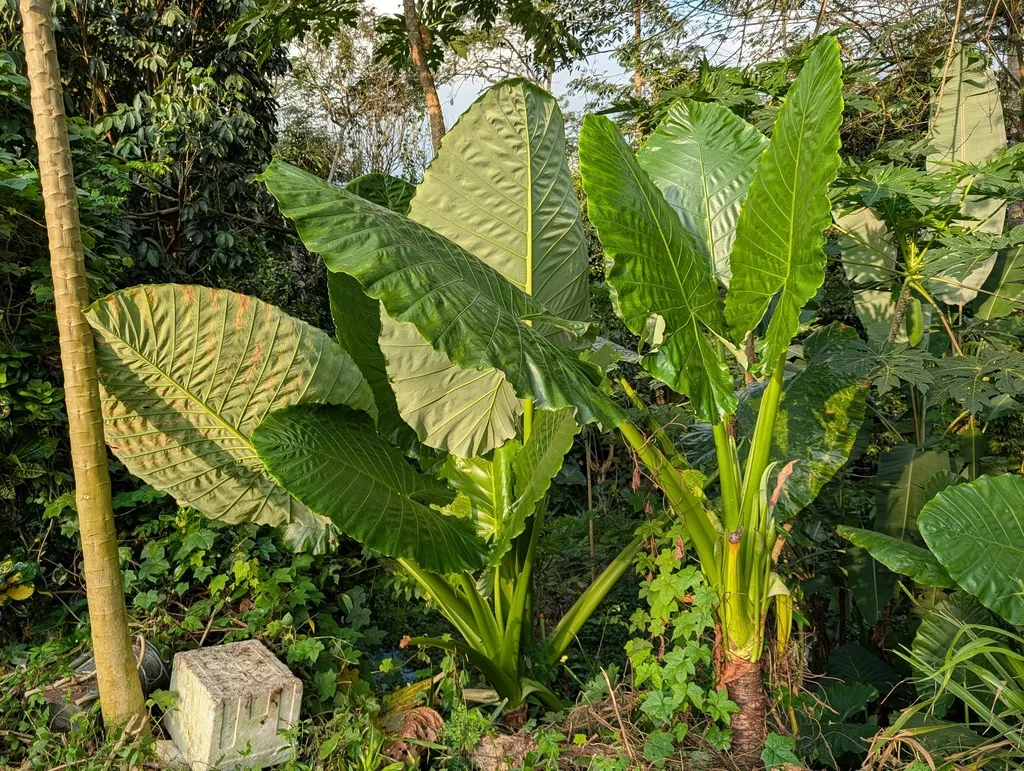
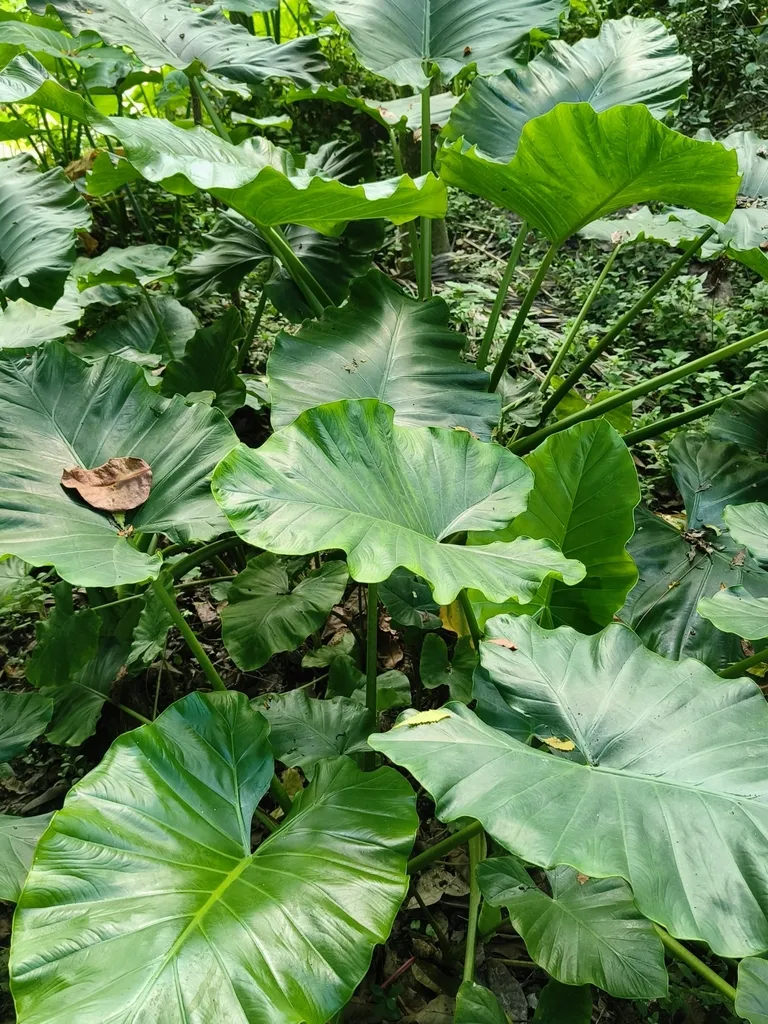
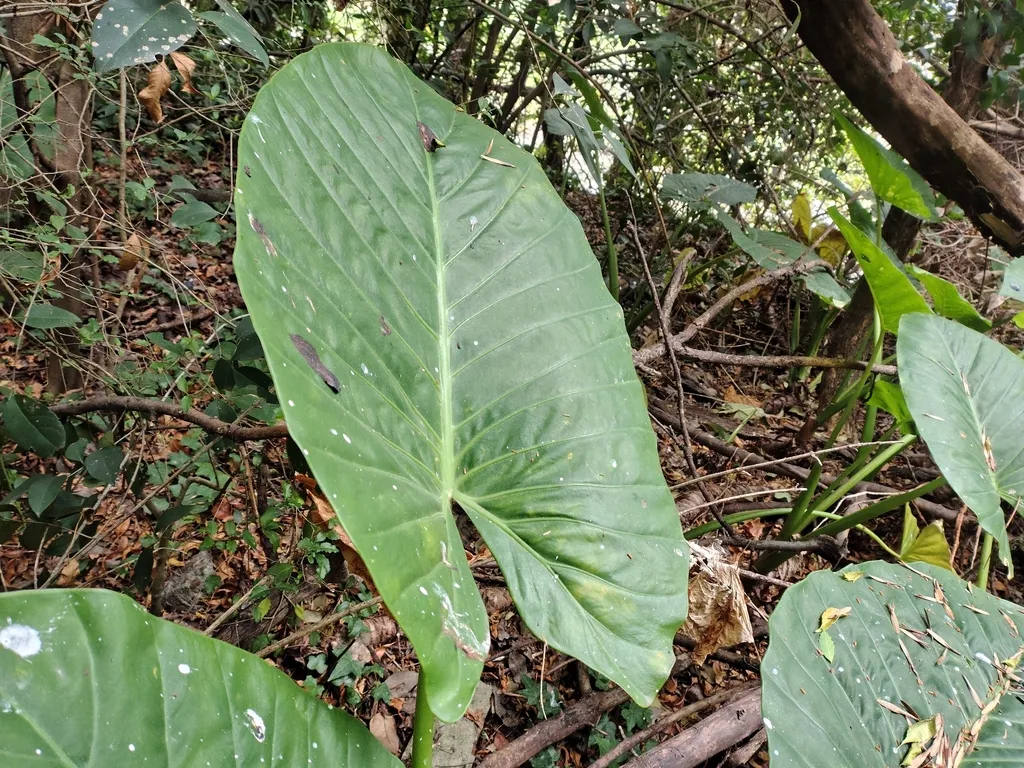
| Care difficulty | 2 / 5 |
|---|---|
| Watering schedule | Keep soil evenly moist with warmth and humidity |
| Sunlight requirements | Partial shade |
| Ideal temperature | 20 – 30 °C |
| Soil type | Loam · Sand |
| Soil pH | Acid · Alkaline · Neutral |
| Soil moisture | Moist but well drained |
| Fertilizing | Balanced feed every few weeks in active growth |
| Toxicity | TOXIC if eaten, skin/eye irritant. Wear gloves and other protective equipment when handling] |
How to Water giant taro?
Originating from tropical rainforests, giant taro thrives in high humidity environments and has adapted to withstand brief periods of drought. This species is characterized by its preference for consistently moist soil, yet it's important not to overwater. The watering schedule should be maintained at once every week to align with its natural water intake rhythm. Typically grown outdoors due to its size and ornamental foliage, giant taro benefits significantly from rainfall patterns that mimic its native habitat, ensuring a balance between moisture and growth cycles.
Learn more →What Are the Sunlight Requirements for giant taro?
Giant taro thrives under partial sun conditions, favoring bright, indirect light that simulates the dappled sunlight of its native understory habitat. While giant taro has a high tolerance for full shade, inadequate light can lead to diminished growth and vitality, potentially causing leggy stems and reduced leaf size. Conversely, too much direct sunlight may scorch leaves, triggering a protective response where giant taro's leaves change orientation or develop a paler color to reflect excess light. Outdoors, giant taro prefers a planting position that provides shelter from the intense midday sun, such as beneath taller vegetation or in the shadow of buildings, ensuring a balance of light exposure that supports robust health and lush foliage.
Learn more →What Is the Ideal Temperature Range for giant taro?

Giant taro exhibits notable resilience to temperature fluctuations, tolerating ranges from 0°C (32°F) to 43°C (109°F). Despite this, it is sensitive to cold and heat extremes. Low temperatures can cause leaf discoloration and drooping, while excessive heat may lead to scorched leaves and stunted growth. To care for giant taro, protective measures like mulching in cold weather and providing shade or increased watering during heatwaves are essential. These tolerances suggest suitability for subtropical to tropical environments. Ensuring conditions stay within its tolerance range will help maintain the plant's health and appearance.
Learn more →What Soil Is Best for giant taro?
Giant taro is not that picky when it comes to soil type, but it grows best in loose and well-drained soils. If planted outdoors, it can grow successfully in all except water-retaining soils. Even though it thrives in humid environments, soggy soil will make it more susceptible to various fungal diseases. If potted, it's best to use peat moss or sandy soil mixed with a small amount of organic fertilizer.
- Soil type
- Loam · Sand
- Soil pH
- Acid · Alkaline · Neutral
What Are the Moisture Requirements for giant taro?
Moist but well drained
Learn more →How to Fertilize giant taro?

For healthy growth, giant taro thrives with high nitrogen fertilizers, enhancing leaf development. Apply a balanced, water-soluble formula (e.g., 20-20-20) bi-weekly during active growth in spring and summer, reducing to monthly in fall and pausing in winter. Use at half-strength to prevent root burn. Young plants benefit from consistent feeding, while mature giant taro requires less. Always water the soil before fertilizing to ensure even distribution and uptake.
Learn more →How to Prune giant taro?

This large, tropical perennial is known for its enormous leaves and rapid growth. Pruning giant taro involves removing dead or damaged leaves and stems in early spring before the growth cycle begins. Use clean, sharp tools to make precise cuts at the base. Regular pruning encourages healthier growth and helps maintain a manageable size. Avoid over-pruning, as giant taro relies on its foliage for photosynthesis. Proper pruning can enhance airflow and reduce pest problems, promoting overall plant health.
Learn more →How to Propagate giant taro?

Giant taro propagates best in Spring, primarily through tuber division. This method has moderate difficulty, ensuring a healthy parent plant and placing tubers in suitable conditions will enhance success. Signs of successful propagation include new growth and roots.
Learn more →How to Transplant giant taro?
The perfect time to transplant giant taro is during mid to late spring or mid to late fall, as the plant thrives in these mild conditions. For best results, choose a location with well-draining soil, partial shade, and ample space.
Learn more →How to Care for giant taro in Winter?

Giant taro thrives in tropical climates, its leathery foliage a testament to its inherent resistance to winter frost. However, its preferred temperature falls above 15°C, making it sensitive to chillier conditions. To winter giant taro, gardeners maintain indoor warmth and humidity, its tropical home mimicked. Protection is also ensured with insulation before expected frost. This exotic plant's journey through winter can be a delicate balancing act, but its lush greenery rewards perceptive care.
Learn more →How to Plant giant taro?
Indoors-potted: Thriving as a lush indoor accent, giant taro appreciates spacious pots to accommodate its large roots and frequent repotting due to rapid growth. Outdoors-potted: Giant taro in outdoor pots brings drama with colossal leaves; ensure robust containers to prevent toppling from its hefty foliage display. Outdoors-in the ground: In garden soil, giant taro's towering presence commands attention; provide ample space for spread and consider proximity to structures.
Learn more →How to Repot giant taro?
Repot giant taro annually in spring, as it's a rapidly growing plant reaching up to 15 feet. Choose a large pot with ample room for root expansion. Opt for well-draining soil and a container with drainage holes to prevent waterlogging. After repotting, keep the soil consistently moist and provide indirect light to encourage steady growth without overwhelming giant taro.
Learn more →Common Pests & Diseases

Diseases
Generally disease-free
Pests
May be susceptible to mealybugs and glasshouse red spider mite
Explore the plant health library →Troubleshooting
Yellowing Outer Leaves and Root or Corm Rot
Alocasia macrorrhizos (giant taro / upright elephant ear) grows into a massive tropical perennial from a thick underground corm and naturally sheds its oldest outer leaves as new giant leaves unfurl.
| What you notice | Possible explanation | What to check next |
|---|---|---|
| One oldest lower leaf yellows and droops slowly while huge new leaves emerge firmly from the center | Normal leaf turnover as the thick trunk-like stem builds | Cut fully yellowed lower leaves cleanly near the stem base with gloved hands. |
| Several leaves yellow rapidly and petioles soften while potting mix stays wet or cold | Overwatering, poor drainage, or corm/root rot | Stop watering, empty standing water, and inspect the roots and corm base for mushy decay. |
| Leaves collapse or blacken after chilly temperatures below 10°C to 13°C (50°F to 55°F) | Frost or chilling injury | Move container plants indoors to a warm spot above 15°C (60°F) and reduce watering if dormant. |
- Grow in a fertile, well-draining, chunky organic potting mix in a large, heavy container with open drainage holes.
- Water thoroughly when the top 1 to 2 inches of mix feel dry during warm active growth, and reduce watering significantly in cool winter conditions.
- Wear gloves when pruning or dividing, as all parts contain insoluble calcium oxalate crystals that irritate skin and mucous membranes.
Alocasia macrorrhizos is toxic to cats, dogs, and humans if chewed or ingested.
Brown Leaf Margins or Spider Mites Indoors
Large elephant-ear leaves lose moisture rapidly in dry heated rooms and attract spider mites when airflow and humidity are low.
| What you notice | Possible explanation | What to check next |
|---|---|---|
| Leaf margins turn brown and dry in heated or air-conditioned indoor rooms | Low indoor humidity or dry drafts | Check proximity to air vents and raise ambient humidity. |
| Fine webbing, pale stippling, and yellowing patches appear on leaf undersides | Two-spotted spider mites | Isolate the plant and wipe or shower both leaf surfaces thoroughly with room-temperature water. |
- Place in bright, indirect light or morning sun with afternoon shade (full sun is tolerated outdoors only with ample moisture and gradual acclimation).
- Wipe dust from the large leaves periodically with a damp cloth and boost humidity in dry indoor rooms.
- Feed every 2 to 4 weeks during warm spring and summer growth with a balanced liquid fertilizer, and pause feeding in winter.
Unlike Colocasia (taro), whose leaf tips usually point downward, Alocasia macrorrhizos holds its thick, glossy, wavy-edged leaves upright or outward with leaf tips pointing up or sideways.
The Toxicity of giant taro
TOXIC if eaten, skin/eye irritant. Wear gloves and other protective equipment when handling]