
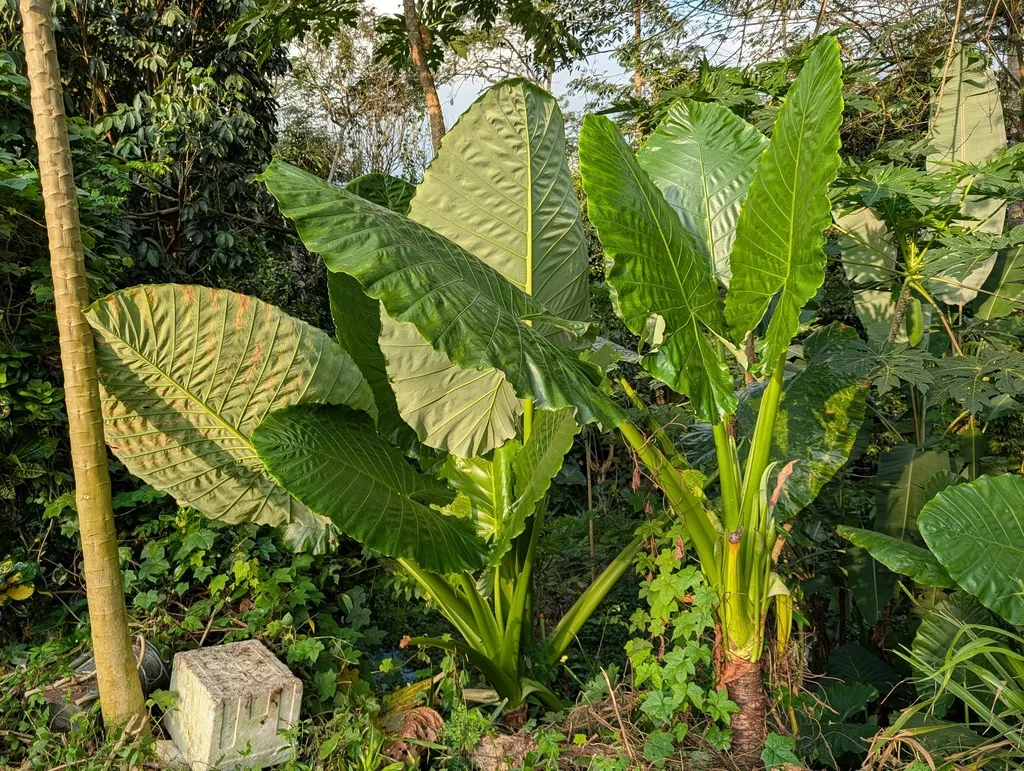



giant taro

giant taro · Soil

giant taro · Alocasia macrorrhizos
Also known as: cunjevoi; giant elephant's ear; taro

Giant taro requires a warm, humid environment and thrives in bright, indirect light. A key special care point is to maintain consistently moist soil without waterlogging, as this can lead to root rot. Proper drainage is crucial. Its large leaves also accumulate dust, necessitating regular gentle wiping to keep them clean and healthy for efficient photosynthesis.

Watering: Keep soil evenly moist with warmth and humiditySunlight: Partial shadeTOXIC if eaten, skin/eye irritant. Wear gloves and other protective equipment when handling]

What Soil Is Best for giant taro?

Giant taro is not that picky when it comes to soil type, but it grows best in loose and well-drained soils. If planted outdoors, it can grow successfully in all except water-retaining soils. Even though it thrives in humid environments, soggy soil will make it more susceptible to various fungal diseases. If potted, it's best to use peat moss or sandy soil mixed with a small amount of organic fertilizer.

Soil type
Loam · Sand
Soil pH
Acid · Alkaline · Neutral
PlantCare

Your Ultimate Guide to Plants

Identify, grow and nurture the better way!

PlantCare plant identification and care illustration
PlantCare

Botanist in your pocket

Scan to download PlantCareDownload on the App Store

Scan the QR code with your phone camera to download the app