



Planting and Growing oyster plant

| Care difficulty | 1 / 5 |
|---|---|
| Watering schedule | Moderate regular watering, allowing brief slight drying between soakings |
| Sunlight requirements | Full sun · Partial shade |
| Ideal temperature | 18 – 27 °C |
| Soil type | Sand · Loam |
| Soil pH | Acid · Alkaline · Neutral |
| Soil moisture | Moist but well drained · Well drained |
| Fertilizing | Balanced perennial feed every four weeks from spring through summer |
| Toxicity | Skin allergen. Wear gloves and other protective equipment when handling |
How to Water oyster plant?
Originating from the undergrowth of tropical forests, oyster plant thrives in environments with high humidity and consistent moisture. This species exhibits a preference for evenly moist soil conditions without being waterlogged. Watering every week is ideal to mimic its natural habitat's hydration cycle. Indoors, oyster plant is favored for its resilience and adaptability to household humidity levels, making it a popular choice for interior greenery. To optimize growth and maintain vibrant foliage, ensuring adequate drainage in containers is crucial as it prevents root rot – a common issue when water lingers around this plant's roots.
Learn more →What Are the Sunlight Requirements for oyster plant?
Oyster plant thrives in partial sun conditions, where it receives less intense, indirect light for several hours a day. The plant can adapt to both full sun and full shade, although these extremes can influence growth and health; full sun may cause leaf scorch while full shade can lead to leggy stems and reduced vibrancy in leaf coloration. Featuring leaves that can alter their angle in response to light, oyster plant maintains a compact form in brighter conditions. For outdoor planting, locations that offer dappled sunlight such as under trees or beside east-facing walls are ideal. Indoors, oyster plant should be placed near a window with filtered light to achieve a balance that mimics its natural habitat.
Learn more →What Is the Ideal Temperature Range for oyster plant?

Oyster plant is resilient to a range of temperatures but showcases notable sensitivity to extremes. It can tolerate cold down to 0℃ (32℉) and heat up to 43℃ (109℉). Its ability to endure these conditions implies that in colder climates, the plant may need protective measures like indoor relocation or frost cloths. In high heat, ensure adequate hydration and partial shade to prevent wilting. Symptoms of temperature stress include discoloration, leaf drop, and stunted growth. Address overcooling by moving oyster plant to a warmer location and overheating by increasing watering and providing shade. These considerations make oyster plant suitable for varied environments, provided care is adapted accordingly.
Learn more →What Soil Is Best for oyster plant?
Oyster plant thrives in well-draining soil mixes to avoid water-logging, critical for its health. For a suitable mix, combine two parts peat moss or coconut coir, one part perlite, and one part potting soil. If perlite is unavailable, use sand, but ensure it's coarse. Promote growth by incorporating a slow-release fertilizer into the mix every six months. Ensure pots have adequate drainage holes to support the mix's effectiveness.
- Soil type
- Sand · Loam
- Soil pH
- Acid · Alkaline · Neutral
What Are the Moisture Requirements for oyster plant?
Moist but well drained · Well drained
Learn more →How to Fertilize oyster plant?

Fertilize oyster plant monthly during growth with high nitrogen fertilizers, using half the recommended strength to boost foliage without risking burn. Benefits include lush leaves and robust health. During winter, reduce to bi-monthly; the plant's metabolism slows down. Use well-diluted solutions to prevent root damage. Seasonal adjustment and careful application promote oyster plant's vitality without overwhelming it.
Learn more →How to Prune oyster plant?

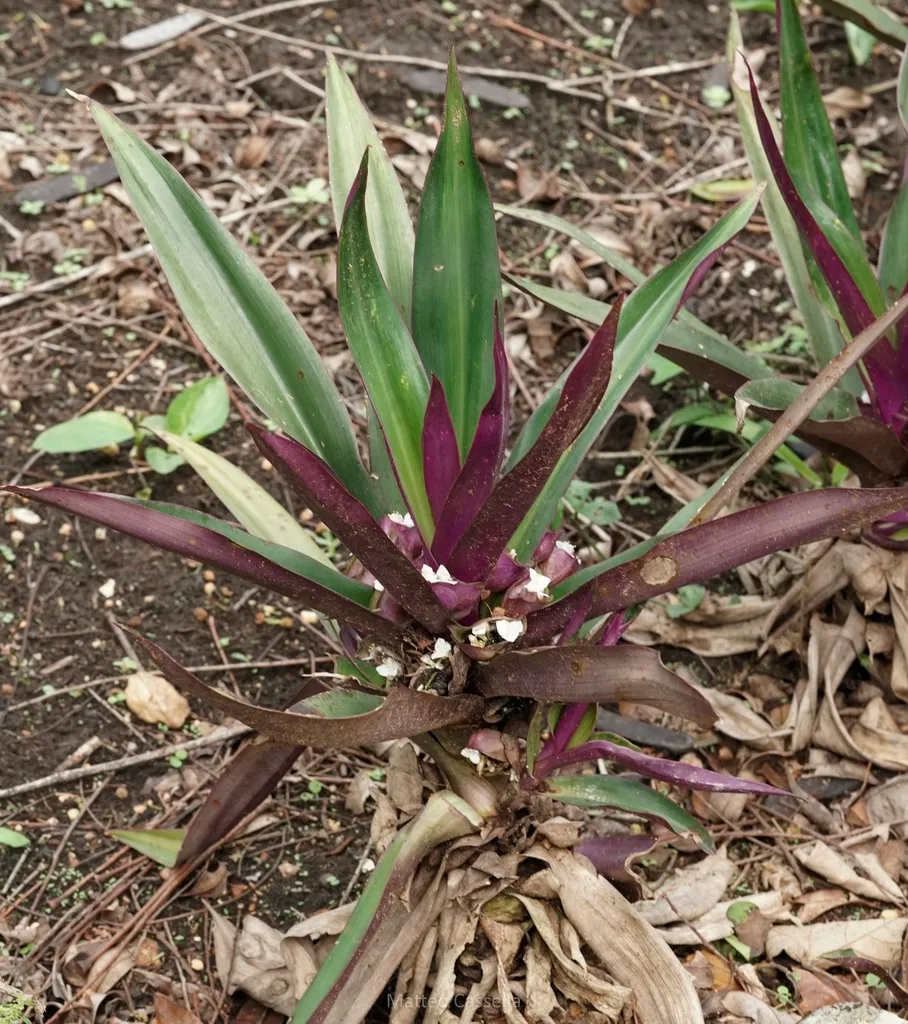
Oyster plant, known for its striking rosette of sword-like leaves, needs regular pruning for optimal health. Prune in early spring to late spring, removing dead or damaged leaves at the base. Cut back overgrown stems to promote bushier growth. Use sterilized tools to prevent infections. Pruning enhances air circulation, reduces pest issues, and maintains a tidy appearance. Regular pruning during its growth season keeps oyster plant vibrant and healthy.
Learn more →How to Propagate oyster plant?

The oyster plant is a striking and resilient herbaceous perennial, ideal for adding a touch of tropical flair to gardens or homes. To propagate, gardeners can utilize stem cuttings. These should be taken with care, selecting healthy, non-flowering stems for the best chance of success. Cuttings can root readily in water or directly in soil, where they must be kept moist until roots have established. With appropriate light and warmth, new growth will typically be observed, indicating a successful propagation.
Learn more →How to Transplant oyster plant?
The best time to transplant oyster plant is during the warm months, typically from late spring to early summer. This ensures optimal growth and acclimation to its new location. Choose a spot with well-drained soil and partial to full sun to allow oyster plant to thrive. Be gentle and careful while moving this delicate perennial to minimize damage.
Learn more →How to Care for oyster plant in Winter?

Oyster plant hails from subtropical and tropical Central America, where frosts are virtually non-existent. Its natural environment has led to adaptive features including frost-sensitive foliage. As a consequence, during winter, gardeners in colder climates should move oyster plant indoors, or offer protective covering to minimize frost damage. Where indoor wintering is not possible, use of warm microclimates is essential for oyster plant's survival.
Learn more →How to Plant oyster plant?
Indoors-potted: To maintain the vibrant foliage of oyster plant, ensure it has enough room to grow indoors, as cramped conditions can diminish its leaf color and vitality. Outdoors-potted: When potted outdoors, oyster plant appreciates a sheltered spot that mimics the dappled light of its natural habitat for optimal growth. Outdoors-in the ground: Oyster plant's resilience allows it to thrive in-ground; however, be mindful of over-spreading which could overshadow nearby smaller plants.
Learn more →How to Repot oyster plant?
The oyster plant is a vibrant, low-growing herbaceous plant. Best repotted every 2-3 years to avoid crowding, ideally during spring to capitalize on the growth season. Choose a pot that's 1-2 inches larger in diameter to accommodate expansion. After repotting, ensure oyster plant has bright, indirect light and consistent moisture to recover and flourish. A slightly larger pot supports oyster plant's roots yet restricts rapid growth, perfect for this unique, easy-care beauty.
Learn more →How to Harvest oyster plant?

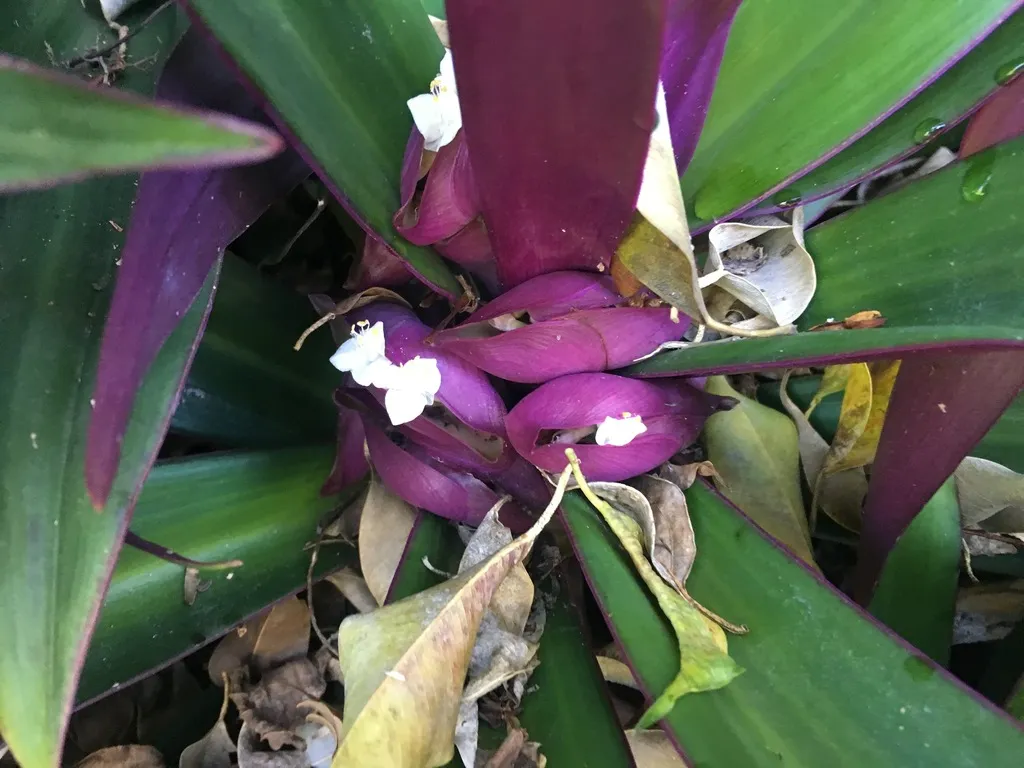
The oyster plant flowers in the summer or early fall. It can be harvested at this time too by drying the flowers in the sun to retain their original bright color. The whole grass can also be cut for use as a medicine.
Learn more →Common Pests & Diseases

Diseases
Generally disease-free
Pests
May be susceptible to red spider mite, mealybugs, aphids, vine weevil and thrips
Explore the plant health library →Troubleshooting
Yellowing Lower Leaves, Root Rot, or Crispy Brown Edges
oyster plant (Tradescantia spathacea) thrives in warm, humid conditions with evenly moist but airy soil; prolonged soggy compost suffocates roots, while dry indoor air or direct sun crisps leaf margins.
| What you notice | Possible explanation | What to check next |
|---|---|---|
| Multiple lower or inner leaves turn yellow and limp while potting mix remains heavy and wet | Overwatering, dense poorly drained compost, or cold drafts causing root/rhizome rot | Feel two inches into the potting mix, check drainage holes, and verify room temperature stays above 15°C (59°F) |
| Leaf tips or margins turn brown and dry while center leaves stay green, or bleached patches appear on sunny sides | Low indoor air humidity, mineral/salt buildup, or harsh direct sun scorch | Check proximity to heaters/vents and whether midday direct sun hits the foliage |
| A single oldest outer leaf yellows gradually while sturdy new growth unfurls at the center | Normal age-related leaf turnover | Confirm the potting mix drains well and new leaves look healthy |
- Pot in an airy, humus-rich, well-drained mix (amended with bark, perlite, or coarse grit) in a container with open drainage holes.
- Water properly: Moderate regular watering, allowing brief slight drying between soakings, and reduce watering during cooler winter months without letting the root ball desiccate completely.
- Provide bright indirect light out of scorching midday sun, boost ambient humidity with a pebble tray or humidifier, and keep away from cold drafts.
Stop watering and inspect roots if stems or rhizomes turn mushy at the soil line; trim decayed roots and repot into fresh airy mix.
Fine Webbing, Sticky Residue, or Leaf Spots
Warm, dry indoor air favors spider mites, mealybugs, and scale on oyster plant (Tradescantia spathacea), while stagnant wet foliage encourages fungal or bacterial leaf spots.
| What you notice | Possible explanation | What to check next |
|---|---|---|
| Speckled pale stippling with fine webbing under leaves, or white cottony clusters along petioles and veins | Sap-sucking pests (May be susceptible to red spider mite, mealybugs, aphids, vine weevil and thrips) | Inspect leaf undersides, midribs, and petiole sheaths with a magnifier |
| Dark water-soaked or yellow-haloed spots expanding on leaves in cool, stagnant, humid conditions | Suspected leaf spot or fungal blight (Generally disease-free) | Check whether water sits on leaves overnight and assess room airflow |
- Isolate affected plants, wipe leaf surfaces and undersides gently with a damp cloth, and apply insecticidal soap or horticultural oil per label directions.
- Remove heavily spotted leaves at the base with sterilized shears, water at the soil surface rather than over the crown, and improve gentle air circulation.
- Keep foliage clean of dust so leaves photosynthesize efficiently.
Avoid spraying foliage in stagnant, cool rooms where leaves cannot dry within a few hours.
The Toxicity of oyster plant
Skin allergen. Wear gloves and other protective equipment when handling