



Planting and Growing Tillandsia dyeriana

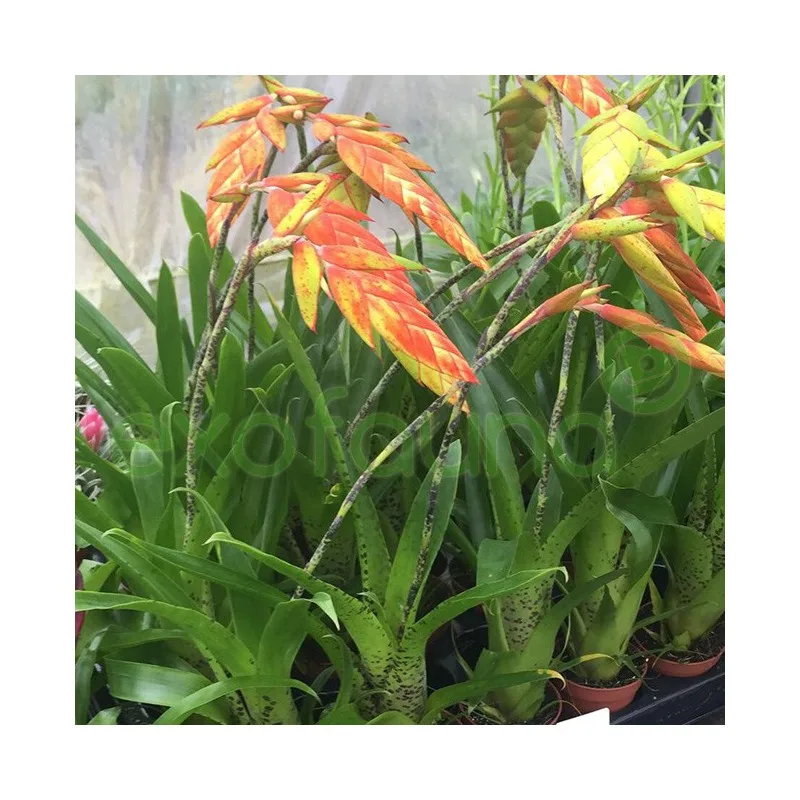
| Care difficulty | 3 / 5 |
|---|---|
| Watering schedule | Moderate regular watering, allowing brief slight drying between soakings |
| Sunlight requirements | Partial shade |
| Ideal temperature | Information to be completed |
| Soil type | Information to be completed |
| Soil pH | Acid · Neutral |
| Soil moisture | Well drained |
| Fertilizing | Balanced perennial feed every four weeks from spring through summer |
| Toxicity | Information to be completed |
How to Water Tillandsia dyeriana?
Moderate regular watering, allowing brief slight drying between soakings
Learn more →What Are the Sunlight Requirements for Tillandsia dyeriana?
Partial shade
Learn more →What Soil Is Best for Tillandsia dyeriana?
- Soil type
- Information to be completed
- Soil pH
- Acid · Neutral
What Are the Moisture Requirements for Tillandsia dyeriana?
Well drained
Learn more →How to Fertilize Tillandsia dyeriana?

Balanced perennial feed every four weeks from spring through summer
Learn more →How to Prune Tillandsia dyeriana?

No pruning required
Learn more →How to Propagate Tillandsia dyeriana?

Propagate by seed sown at 27°C in spring, onto bundles of conifer twigs and sphagnum moss; mist daily. Detach offsets in spring
Learn more →How to Plant Tillandsia dyeriana?
Under glass, grow epiphytically, or in pots of free-draining compost composed of equal parts of orchid compost, perlite and coir fibre. Position in bright, indirect light, with moderate to high humidity. From late spring to late summer water moderately and apply a balanced foliar feed monthly. Water sparingly in winter. See Bromeliad cultivation
Learn more →Common Pests & Diseases

Diseases
Generally disease-free
Pests
Generally pest-free
Explore the plant health library →