



Planting and Growing Anthurium Red Champion ('Anthbnena')

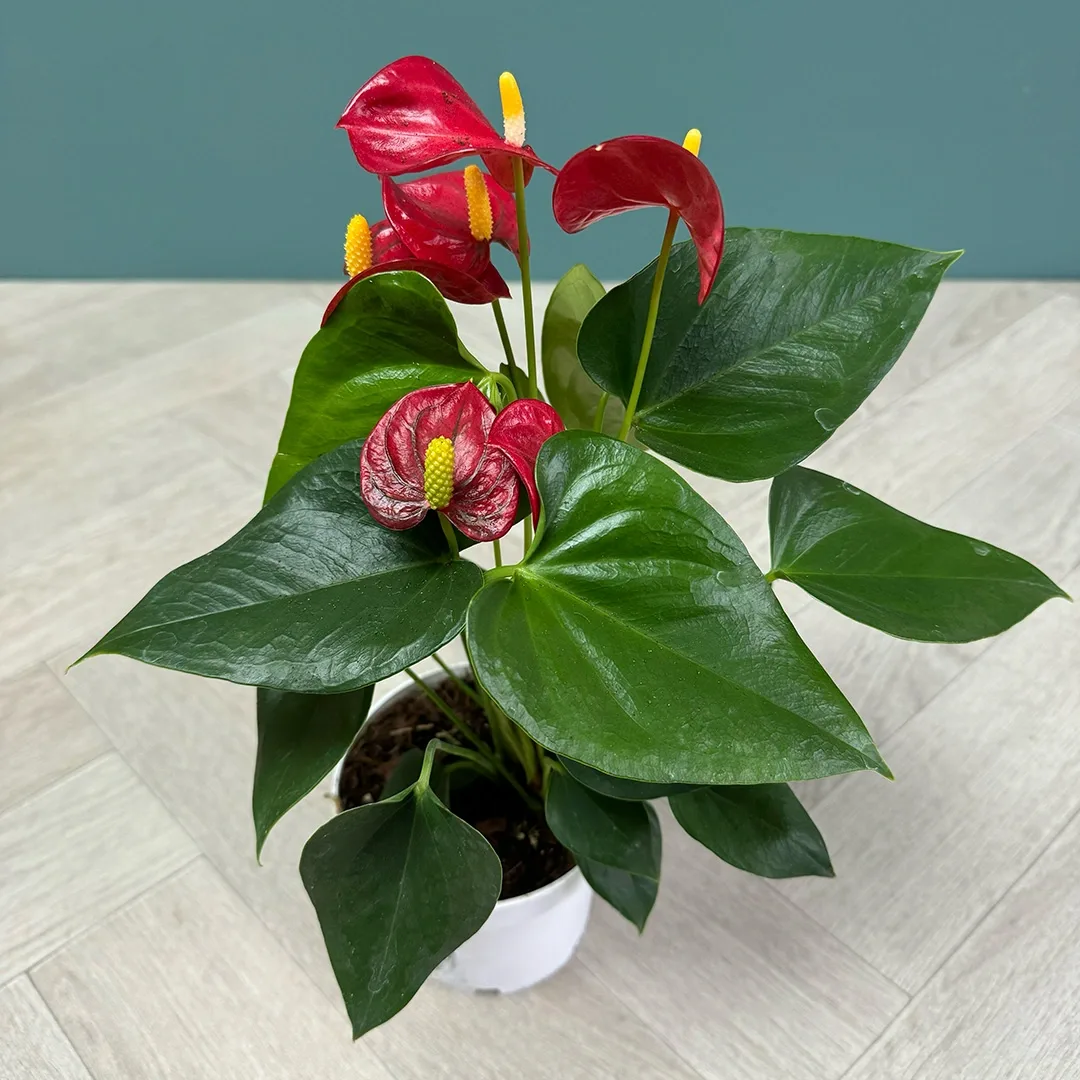
| Care difficulty | 4 / 5 |
|---|---|
| Watering schedule | Moderate regular watering, allowing brief slight drying between soakings |
| Sunlight requirements | Full sun · Partial shade |
| Ideal temperature | Information to be completed |
| Soil type | Loam |
| Soil pH | Neutral · Acid |
| Soil moisture | Moist but well drained |
| Fertilizing | Balanced perennial feed every four weeks from spring through summer |
| Toxicity | Harmful if eaten, skin/eye irritant. Wear gloves and other protective equipment when handling] |
How to Water Anthurium Red Champion ('Anthbnena')?
Moderate regular watering, allowing brief slight drying between soakings
Learn more →What Are the Sunlight Requirements for Anthurium Red Champion ('Anthbnena')?
Full sun · Partial shade
Learn more →What Soil Is Best for Anthurium Red Champion ('Anthbnena')?
- Soil type
- Loam
- Soil pH
- Neutral · Acid
What Are the Moisture Requirements for Anthurium Red Champion ('Anthbnena')?
Moist but well drained
Learn more →How to Fertilize Anthurium Red Champion ('Anthbnena')?

Balanced perennial feed every four weeks from spring through summer
Learn more →How to Prune Anthurium Red Champion ('Anthbnena')?

No pruning required
Learn more →How to Propagate Anthurium Red Champion ('Anthbnena')?

Propagate by seed sown at 24-27°C as soon as ripe; seeds can take months to germinate. Propagate by division in winter. As this plant is protected by Plant Breeders' Rights, any propagation should be for personal rather than commercial use
Learn more →How to Plant Anthurium Red Champion ('Anthbnena')?
Plant with the crowns just above the surface and cover with moss to prevent the uppermost roots from drying out. Grow under glass or indoors epiphytically in a mix of 1 part fibrous loam, 1 part coarse sand and 2-3 parts leaf mould with a little charcoal. Filtered light, constant temperature (min 16°C) and high humidity are required in summer, and full light in winter. In the growing season water freely and apply a balanced liquid fertiliser. Can be grown outdoors epiphytically in a warm, moist site or in moist, coarse, humus-rich soil
Learn more →Common Pests & Diseases

Diseases
May be susceptible to leaf spot
Pests
May be susceptible to mealybugs and scale insects
Explore the plant health library →The Toxicity of Anthurium Red Champion ('Anthbnena')
Harmful if eaten, skin/eye irritant. Wear gloves and other protective equipment when handling]