



Planting and Growing watermelon begonia

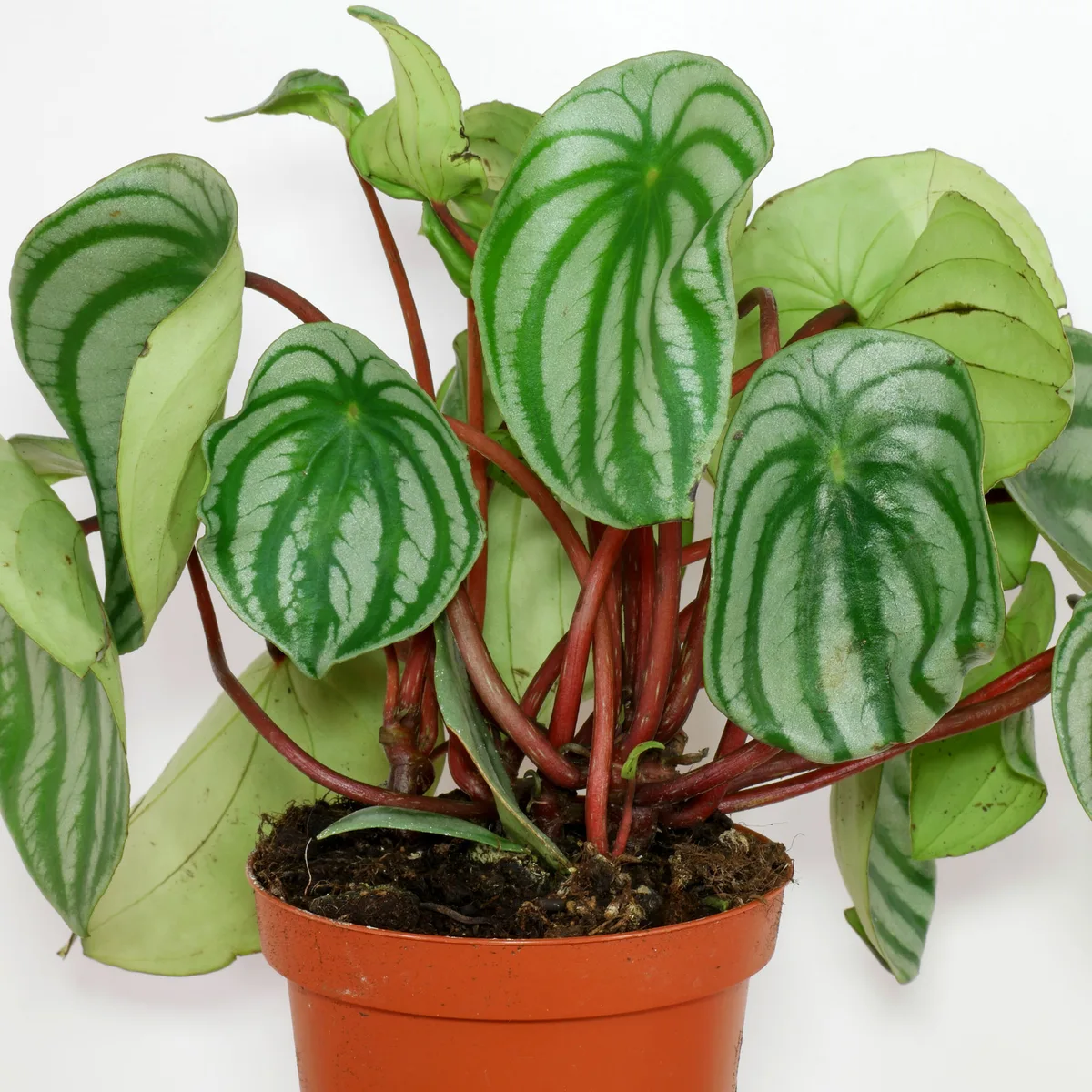
| Care difficulty | 2 / 5 |
|---|---|
| Watering schedule | Water thoroughly once top soil dries, reduce watering winter |
| Sunlight requirements | Partial shade |
| Ideal temperature | 18 – 27 °C |
| Soil type | Loam |
| Soil pH | Acid · Neutral |
| Soil moisture | Moist but well drained |
| Fertilizing | Diluted foliage feed every four warm growing season weeks |
| Toxicity | Information to be completed |
How to Water watermelon begonia?
Originating from the humid, understory of South American forests, watermelon peperomia thrives in moist environments but is well-adapted to less frequent watering, maintaining a balance between hydration and drought tolerance. Watering every week will suffice for this species. Its succulent-like leaves suggest an ability to retain water efficiently, allowing it to withstand periods without moisture. Typically grown indoors due to its preference for stable conditions, watermelon peperomia benefits from consistent humidity levels that mimic its tropical origins, making it ideal for terrariums or well-lit bathrooms.
Learn more →What Are the Sunlight Requirements for watermelon begonia?
Watermelon peperomia thrives in environments that offer bright, indirect light and full to partial shade. Optimal growth is observed under diffused lighting that mimics the dappled light of its natural habitat. Although watermelon peperomia can tolerate low light, it may lead to leggy growth and reduced vibrancy in foliage. Conversely, direct sunlight can scorch its distinctive, watermelon-like leaves, causing them to lose their luster. When grown indoors, eastern or northern window sills are ideal to provide the gentle light watermelon peperomia prefers. Outdoors, watermelon peperomia should be placed in locations where it can be shielded from midday sun, such as beneath taller plants or in the shadow of structures, to ensure it receives the right balance of light for robust health.
Learn more →What Is the Ideal Temperature Range for watermelon begonia?

Watermelon peperomia shows resilience toward moderate temperature fluctuations but can endure temperatures from 5℃ (41℉) to 43℃ (109℉). Though it can tolerate some cold, it is sensitive to frost; prolonged exposure below this range may cause leaf damage. Similarly, excessive heat may lead to wilting and leaf scorch. It's essential to shield watermelon peperomia from frost by relocating indoors during cold spells and ensuring adequate hydration and shade during extreme heat. Signs of stress under inappropriate temperatures include drooping leaves, discoloration, and slowed growth. If overcooling or overheating occurs, immediately adjust the environmental conditions and monitor the plant for recovery.
Learn more →What Soil Is Best for watermelon begonia?
Watermelon peperomia's health depends on well-draining soil to prevent root rot. A suitable mix might include two parts peat moss, one part perlite, and one part compost, providing aeration and nutrients. If compost is unavailable, use worm castings as an alternative. Ensure to lighten dense potting mixes with perlite or coarse sand. During the growing season, monthly use of balanced, diluted liquid fertilizer enhances growth. Avoid too dense or water-retentive soils to maintain proper drainage.
- Soil type
- Loam
- Soil pH
- Acid · Neutral
What Are the Moisture Requirements for watermelon begonia?
Moist but well drained
Learn more →How to Fertilize watermelon begonia?

For watermelon peperomia, a high-nitrogen fertilizer promotes foliage development, crucial for its ornamental appeal. Fertilize sparingly, every 3-4 weeks during active growth in spring and summer, reducing to every 6 weeks in fall and halting in winter. Use diluted solutions to prevent root burn. A balanced, water-soluble option, at one-quarter strength, ensures safe nourishment. Adjust frequency according to light exposure; higher light may require increased feeding.
Learn more →How to Prune watermelon begonia?

Watermelon peperomia, known for its attractive, patterned foliage, benefits from regular pruning to maintain its shape and health. Prune in early to late spring by pinching off leggy growth and removing any dead or damaged leaves. This promotes bushier growth and better airflow. Ensure cuts are made just above a leaf node or stem to encourage new growth. Pruning helps prevent overgrowth and maintains the plant's aesthetic appeal. Use clean, sharp scissors to avoid infection.
Learn more →How to Propagate watermelon begonia?

Watermelon peperomia easily propagates through cuttings, with the ideal season being spring and summer. To ensure success, look for healthy, new growth and consider maintaining high humidity. Signs of successful propagation include the emergence of new leaves and roots.
Learn more →How to Transplant watermelon begonia?
The perfect time to transplant watermelon peperomia is during the cusp of early to mid-spring, allowing it to thrive in the growing season. When transplanting, choose a well-draining location with indirect sunlight. Remember, a gentle touch keeps watermelon peperomia content during the move.
Learn more →How to Care for watermelon begonia in Winter?

Watermelon peperomia originates from tropical South American rainforests which do not experience winter frost. This warmth-loving plant has no natural winter adaptations. During winter, keep it indoors with stable, warm temperatures around 18-24°C (65-75°F). It also needs reduced watering and should be kept away from cold drafts, while still providing bright, indirect light. Careful winter care assures watermelon peperomia thrives year-round.
Learn more →How to Plant watermelon begonia?
Indoors-potted: Keep watermelon peperomia in a stable environment as indoor temperature fluctuations can stress it out, potentially affecting its vibrant foliage pattern. Outdoors-potted: Watermelon peperomia might struggle outdoors due to its preference for consistent conditions; sheltered patios could be an exception if monitored closely. Outdoors-in the ground: Planting watermelon peperomia directly in the garden isn't ideal; they thrive in controlled environments where their delicate leaves are protected.
Learn more →How to Repot watermelon begonia?
Watermelon peperomia, resembling mini watermelons, thrives in a compact form up to 8 inches high. Repot every 2-3 years in spring to promote health and vigor. Choose a slightly larger pot with good drainage. Post-repot, keep the soil moist and provide bright, indirect light to ease stress and encourage steady growth.
Learn more →Common Pests & Diseases

Diseases
Generally disease free
Pests
Generally pest-free
Explore the plant health library →Troubleshooting
Soft, Dropping Leaves, Cracked Blades, and Root or Petiole Rot
Peperomia argyreia (watermelon peperomia) has succulent, peltate silver-striped leaves on fleshy pink petioles and a small, delicate root system that rots rapidly in wet soil or oversized pots.
| What you notice | Possible explanation | What to check next |
|---|---|---|
| Lower leaves turn yellow, limp, or mushy at the petiole base while potting mix stays damp | Overwatering or poorly draining soil causing root/stem rot | Stop watering immediately, empty standing water, and allow the potting mix to dry out thoroughly before watering again. |
| New leaves emerge crinkled, cupped, or split/cracked along the edges | Uneven watering swings, low humidity, or calcium/micronutrient imbalance | Keep watering rhythm consistent (watering thoroughly when the top 1 to 2 inches of airy mix dry) and maintain moderate humidity. |
- Allow the top 1 to 2 inches of potting mix to dry out between thorough waterings, and never let the pot sit in water.
- Grow in a small, shallow pot with open drainage holes using an airy, fast-draining mix (such as peat/coir amended heavily with perlite or fine bark).
- Propagate healthy leaves easily in spring or summer via leaf-petiole cuttings or half-leaf wedges inserted into moist perlite/peat mix.
Peperomia argyreia is listed as non-toxic to cats and dogs by the ASPCA.
Fading Watermelon Stripes or Leggy Petioles
Vivid silver-and-green watermelon banding and compact, upright petioles depend on bright, indirect light.
| What you notice | Possible explanation | What to check next |
|---|---|---|
| Petioles stretch long and floppy while silver stripes fade to dull green | Insufficient light | Move closer to a bright east- or north-facing window, or a filtered south/west window. |
| Bleached or scorched tan patches appear on leaves facing sunny glass | Direct midday/afternoon sun exposure | Filter harsh sunlight with a sheer curtain. |
- Place in bright, indirect light out of direct afternoon sun, rotating the pot weekly for a symmetrical mound.
- Feed lightly once a month during spring and summer with a balanced liquid fertilizer diluted to quarter or half strength, and pause feeding in winter.
- Keep indoor temperatures warm between 18°C and 25°C (65°F to 77°F) away from cold drafts.
Tall, narrow rat-tail flower spikes are normal on healthy Peperomia argyreia; you can leave them or snip them off to direct energy back to foliage.