



Planting and Growing baby rubber plant

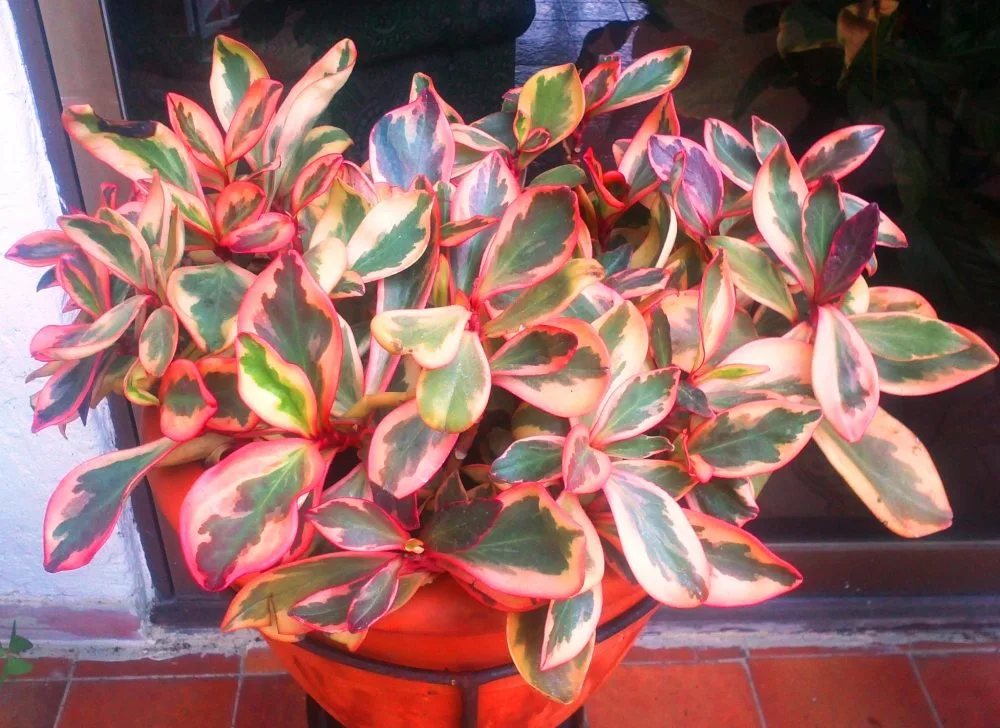
| Care difficulty | 2 / 5 |
|---|---|
| Watering schedule | Moderate regular watering, allowing brief slight drying between soakings |
| Sunlight requirements | Partial shade |
| Ideal temperature | 18 – 27 °C |
| Soil type | Loam |
| Soil pH | Acid · Alkaline · Neutral |
| Soil moisture | Moist but well drained · Well drained |
| Fertilizing | Balanced perennial feed every four weeks from spring through summer |
| Toxicity | Information to be completed |
How to Water baby rubber plant?
Originating from the understory of tropical rainforests, peperomia Jelly thrives in high humidity and consistently moist soil conditions. This species exhibits a preference for evenly balanced moisture, showing moderate drought tolerance when established. Watering every week is ideal to mimic its natural habitat's water cycle. As an indoor plant often praised for its ornamental leaves, peperomia Jelly benefits significantly from regular misting to maintain ambient humidity, enhancing both its health and decorative appeal.
Learn more →What Are the Sunlight Requirements for baby rubber plant?
Peperomia Jelly thrives in partial sun exposure, which entails receiving bright but indirect light for several hours each day. Ideally, it should be positioned in a location where the intensity of light is moderated by partial shading, such as under a canopy or with filtered sunlight through curtains. Peperomia Jelly exhibits a high degree of light tolerance and can also adapt to full sun conditions; however, excessive direct sunlight may lead to leaf burn or faded leaf color. When grown indoors, east or west-facing windows are ideal settings to meet its light requirements. The plant's leaves may display richer colors when the light conditions are perfectly balanced.
Learn more →What Is the Ideal Temperature Range for baby rubber plant?

Peperomia Jelly is remarkably resilient to temperature fluctuations, tolerating cold down to 5℃ (41℉) and heat up to 45℃ (113℉). This broad range means it can thrive in diverse environments, although protective measures are essential during extremes to prevent stress. Under cold stress, peperomia Jelly may exhibit leaf drop and slowed growth, while excessive heat can cause leaf scorch and wilting. In case of overcooling, ensure the plant is moved to a warmer location and away from drafts. For overheating, increase humidity and provide shade. Peperomia Jelly's adaptability simplifies its care, but attention to temperature extremes is crucial for maintaining its health.
Learn more →What Soil Is Best for baby rubber plant?
For peperomia Jelly, ensure excellent soil aeration and drainage to prevent water-logging. Use a mix of garden soil, coarse sand, and perlite or vermiculite. If coarse sand is unavailable, pine bark can serve as an alternative. A general indoor plant fertilizer can be applied monthly during the growing season to boost growth. Ensuring a well-draining soil mix is crucial to avoid root rot and keep peperomia Jelly healthy.
- Soil type
- Loam
- Soil pH
- Acid · Alkaline · Neutral
What Are the Moisture Requirements for baby rubber plant?
Moist but well drained · Well drained
Learn more →How to Fertilize baby rubber plant?

Fertilize peperomia Jelly bi-weekly during spring and summer with a high nitrogen formula, halving the recommended dose to avoid root burn. This regimen ensures robust foliage growth, as peperomia Jelly doesn't bloom. In cooler months, reduce feeding to monthly. Always water peperomia Jelly before fertilizing to dampen the soil. For young plants, use a quarter strength to prevent overfeeding. Continual observation for signs of overfertilization, such as leaf yellowing or brown tips, is vital.
Learn more →How to Prune baby rubber plant?

Peperomia Jelly with its variegated leaves and compact growth can be pruned to maintain shape and encourage new growth. Key techniques involve removing leggy, damaged, or dead stems. Prune during early to late spring for best results, aligning with its active growth period. Regular pruning prevents overcrowding and promotes a fuller appearance. Ensure clean, sharp tools to avoid plant stress and minimize disease risk. Pruning peperomia Jelly enhances its aesthetic appeal and overall health.
Learn more →How to Propagate baby rubber plant?

Peperomia Jelly thrives when propagated via cutting, a straightforward process involving a healthy leaf or stem segment. To foster root development, the cuttings should be placed in a well-draining potting mix or water until roots emerge. Ensuring high humidity and warm temperatures will facilitate quicker root growth. Once roots establish, transplanting them into their permanent pot encourages a bushier growth. Care should be taken to not overwater the newly potted peperomia Jelly to prevent root rot.
Learn more →How to Transplant baby rubber plant?
The optimal time to transplant peperomia Jelly is during the warmth of mid to late summer, promoting robust root development. Choose a spot with bright, indirect light, maintain high humidity for peperomia Jelly, and ensure gentle handling to avoid root shock.
Learn more →How to Plant baby rubber plant?
Indoors-potted: In an indoor setting, peperomia Jelly thrives with stable temperatures and benefits from being rotated periodically to ensure even growth. Outdoors-potted: Peperomia Jelly can enjoy the outdoor air but prefers a sheltered spot where its delicate leaves are protected from harsh conditions. Outdoors-in the ground: While peperomia Jelly is adaptable, it's not common to grow it in-ground outdoors due to its sensitivity to cold and preference for controlled environments.
Learn more →How to Repot baby rubber plant?
Ideal for repotting every 2-3 years, peperomia Jelly thrives best when its compact, bushy growth is refreshed. Choose springtime for repotting to support the plant's active growth phase. Select a slightly larger pot to encourage healthy root development. Post-repot, ensure bright, indirect light and consistent moisture without waterlogging. A well-draining pot and regular observation will keep peperomia Jelly looking luscious.
Learn more →Common Pests & Diseases

Diseases
Generally disease-free
Pests
Generally pest-free
Explore the plant health library →