



Planting and Growing rubber plant 'Tineke'

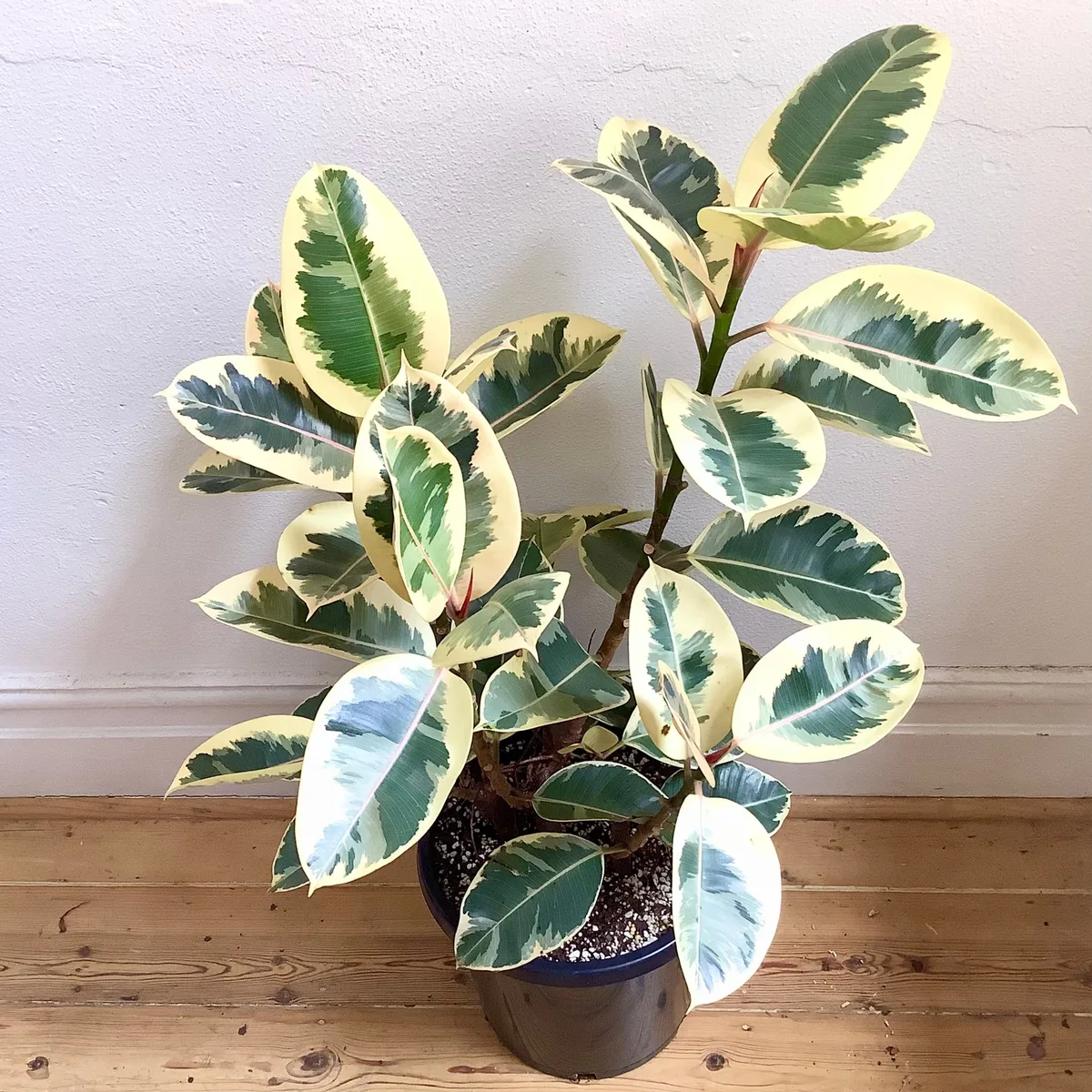
| Care difficulty | 2 / 5 |
|---|---|
| Watering schedule | Moderate regular watering, allowing brief slight drying between soakings |
| Sunlight requirements | Full sun · Partial shade |
| Ideal temperature | 18 – 27 °C |
| Soil type | Chalk · Clay · Loam · Sand |
| Soil pH | Acid · Alkaline · Neutral |
| Soil moisture | Moist but well drained · Well drained |
| Fertilizing | Balanced perennial feed every four weeks from spring through summer |
| Toxicity | Information to be completed |
How to Water rubber plant 'Tineke'?
Variegated Rubber Tree is a plant that appreciates a balance between moisture and dryness. Native to tropical rainforests, it has adapted to periods of heavy rainfall followed by drier spells. Its watering habits reflect this, requiring watering once every 1-2 weeks. Variegated Rubber Tree can be grown both indoors and outdoors, but as an evergreen plant, it prefers humid climates where its water needs are more naturally met.
Learn more →What Are the Sunlight Requirements for rubber plant 'Tineke'?
Variegated Rubber Tree thrives best in partial sunlight, where it receives moderate, indirect light for the bulk of the day. While the plant tolerantly adapts to both full sun and full shade, optimal growth and the vivid variegation of its leaves are most pronounced under partial sun exposure. In full sun, variegated Rubber Tree's leaves may scorch, and in deep shade, the striking colors may fade and growth may slow. Indoor positioning should ideally include placement near east or west-facing windows where light is bright but not harsh. This balance ensures robust health and aesthetic appeal.
Learn more →What Is the Ideal Temperature Range for rubber plant 'Tineke'?

Variegated Rubber Tree demonstrates remarkable tolerance to a range of temperatures, enduring from 0°C to 43°C (32°F to 109°F). Although resilient, the plant shows sensitivity to prolonged cold that may cause leaf drop and discoloration, and overheating that might lead to leaf scorch and wilting. During extreme weather, it's essential to shield the plant—moving indoors to avoid cold snaps or providing shade and increased humidity in scorching heat. Recognizing these symptoms early and responding with these countermeasures helps maintain the health and aesthetic appeal of variegated Rubber Tree in diverse environments.
Learn more →What Soil Is Best for rubber plant 'Tineke'?
Variegated Rubber Tree prefers fertile soil and cannot resist barren ground. It does not like sticky soil with poor drainage, so a plot rich in organic substances and not easily compacted is preferred. The soil should be slightly acid, with a pH of 6-6.5. When used as a potted plant, mix leaf mold, garden soil, and organic fertilizer at a ratio of 4:3:3.
- Soil type
- Chalk · Clay · Loam · Sand
- Soil pH
- Acid · Alkaline · Neutral
What Are the Moisture Requirements for rubber plant 'Tineke'?
Moist but well drained · Well drained
Learn more →How to Fertilize rubber plant 'Tineke'?

Fertilize variegated Rubber Tree with balanced nutrition during growth (spring-summer), monthly, incorporating high nitrogen content early spring for vigor. Apply quart-sized dilution per foot of plant height. Benefit: robust growth, aesthetically pleasing foliage. Annual growth stage influences needs; less frequent in winter. Precaution: avoid over-fertilization—risk of root burn, foliage distress. Tip: ensure soil moisture pre-fertilization to absorb nutrients effectively.
Learn more →How to Prune rubber plant 'Tineke'?

Variegated Rubber Tree features large, glossy, variegated leaves. Prune in early to late winter when the plant is dormant to control size and shape. Use sterilized shears to trim above a node or leaf. Regular pruning promotes bushier growth and removes leggy stems. Avoid heavy pruning as it can stress the plant. Periodic check-ups for dead or damaged leaves enhance its health and aesthetics. This practice encourages a robust and attractive display.
Learn more →How to Propagate rubber plant 'Tineke'?

Variegated Rubber Tree is a cultivar famed for its striking variegation, robust nature, and ease of care which extends to its propagation techniques. Careful snipping of healthy stem cuttings ensures successful cloning, where a clean cut below a leaf node encourages root development when placed in water or moist soil. Ensuring bright, indirect light and warmth is pivotal for optimal root growth. Utilization of rooting hormone can enhance root establishment, though it's not essential due to the plant's natural vigor.
Learn more →How to Transplant rubber plant 'Tineke'?
The quintessential time to reposition variegated Rubber Tree is during the vernal months, leveraging robust growth. Select a luminous nook, free from drafts. Gently acclimate variegated Rubber Tree to its new abode, ensuring soil harmony and root ease.
Learn more →How to Plant rubber plant 'Tineke'?
If your potted variegated Rubber Tree outgrows your home, transplant it to the garden. Seedlings bought in a garden center can also be planted directly in the garden; the best time for transplanting is late spring. If the garden soil is not fertile enough, you can add some organic fertilizer to the planting hole. When transplanted to the garden, roots should be level with the ground and not buried too deeply. After transplanting, water thoroughly and slowly to prevent water from dispersing the soil. Water new plants twice a week to keep the soil moist.
Learn more →How to Repot rubber plant 'Tineke'?
Repot variegated Rubber Tree every 2-3 years, ideally during spring to encourage vigorous growth. This robust, upright plant prefers a spacious container that allows its roots to spread. After repotting, place it in bright, indirect light and maintain consistent moisture without overwatering. Variegated Rubber Tree rewards careful attention with striking variegated foliage, enhancing its surroundings with tropical flair.
Learn more →Common Pests & Diseases

Diseases
May be susceptible to honey fungus
Pests
May be susceptible to glasshouse red spider mite, thrips, mealybugs and scale insects
Explore the plant health library →Troubleshooting
Yellowing Lower Leaves, Root Rot, or Crispy Brown Edges
rubber plant 'Tineke' (Ficus elastica 'Tineke') thrives in warm, humid conditions with evenly moist, well-aerated compost; soggy soil suffocates roots, while dry indoor air, hard tap water, or direct hot sun crisps leaf margins.
| What you notice | Possible explanation | What to check next |
|---|---|---|
| Multiple lower or inner leaves turn yellow and limp while potting mix remains heavy and wet | Overwatering, dense poorly drained compost, or cold drafts causing root rot | Feel two inches into the potting mix, check drainage holes, and verify room temperature stays above 15°C (59°F) |
| Leaf tips or margins turn brown and dry while center leaves stay green, or bleached patches appear on sunny sides | Low indoor air humidity, mineral/fluoride buildup from hard tap water (common in Marantaceae/Dracaena/palms), or harsh direct sun scorch | Check proximity to heaters/vents, water quality, and whether midday direct sun hits the foliage |
- Pot in an airy, humus-rich, well-drained mix (amended with bark, perlite, or coarse grit) in a container with open drainage holes.
- Water properly: Moderate regular watering, allowing brief slight drying between soakings, and reduce watering during cooler winter months without letting the root ball desiccate completely.
- Provide bright indirect light out of scorching midday sun, boost ambient humidity with a pebble tray or humidifier (using rainwater or distilled water for salt-sensitive prayer plants and dracaenas), and keep away from cold drafts.
Stop watering and inspect roots if stems or rhizomes turn mushy at the soil line; trim decayed roots and repot into fresh airy mix.
Fine Webbing, Sticky Residue, or Leaf Spots
Warm, dry indoor air favors spider mites, mealybugs, and scale on rubber plant 'Tineke' (Ficus elastica 'Tineke'), while stagnant wet foliage encourages fungal or bacterial leaf spots.
| What you notice | Possible explanation | What to check next |
|---|---|---|
| Speckled pale stippling with fine webbing under leaves, or white cottony clusters along petioles and veins | Sap-sucking pests (May be susceptible to glasshouse red spider mite, thrips, mealybugs and scale insects) | Inspect leaf undersides, midribs, and petiole sheaths with a magnifier |
| Dark water-soaked or yellow-haloed spots expanding on leaves in cool, stagnant, humid conditions | Suspected leaf spot or fungal blight (May be susceptible to honey fungus) | Check whether water sits on leaves overnight and assess room airflow |
- Isolate affected plants, wipe leaf surfaces and undersides gently with a damp cloth, and apply insecticidal soap or horticultural oil per label directions.
- Remove heavily spotted leaves at the base with sterilized shears, water at the soil surface rather than over the crown, and improve gentle air circulation.
- Keep foliage clean of dust so leaves photosynthesize efficiently.
Avoid spraying foliage in stagnant, cool rooms where leaves cannot dry within a few hours.